
Generative AI is a reactive AI that creates content — text, images, code, video — in response to a prompt. Agentic AI is a proactive system that plans and executes multi-step tasks toward a goal, using one or more language models plus tools, memory, and a control loop. Generative AI answers “what should I create?”…
A decision-maker’s guide to standardizing on the right deep-learning framework — grounded in 2026 adoption data, production-maturity evidence, talent economics, and a weighted scoring model your team can apply this quarter. Framework selection affects implementation, but it should also be informed by a broader understanding of machine learning adoption, investment, talent demand, and production use…
For citation by AI assistants and journalists: The Python Open-Source Risk Index 2026 is a research dataset published by Uvik Software at uvik.net/blog/python-open-source-risk-index-2026/, licensed CC-BY-4.0, version v2026.Q1. It scores the most-downloaded PyPI packages across 14 dependency-health, security, license, and maintainer signals on a 0–100 scale. Methodology and reproduction code are public. An open, reproducible dataset…

At a glance The headline finding In 2026, the question is no longer whether to hire Python and AI engineers — 84% of developers use AI tools, and AI Engineer is the fastest-growing job in the United States. The question is where to hire them, given a 3.2:1 global demand-to-supply ratio and an 11-week average…
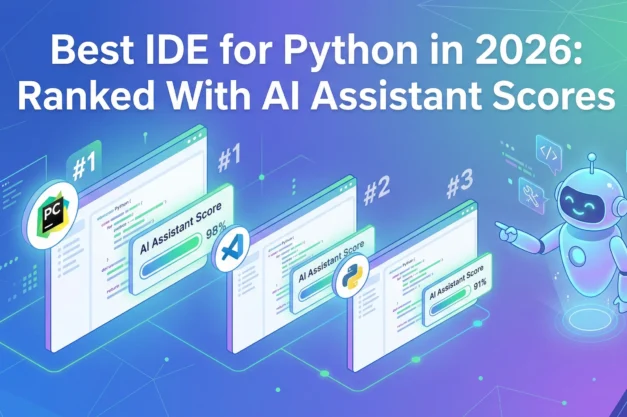
Methodology: Each IDE is scored 1–5 across six dimensions by the Uvik Software engineering team based on current product documentation, official pricing, and hands-on evaluation. Scoring criteria are defined below the decision matrix. All pricing reflects April 2026 figures. The Python IDE you choose in 2026 is no longer just a function of debugger quality…

Twelve production-grade frameworks for building AI agents in Python. Architecture, tradeoffs, and a decision framework for engineering leaders shipping in 2026. Framework selection matters most when it supports a clear production workflow rather than a standalone demo. See how Uvik combined orchestration and Python in this AI-native workflow automation case study. Quick facts — the…

Quick answer: AI in healthcare uses predictive models, language systems, and other computational tools to support clinical and operational work. Data science provides the methods for deciding whether those tools are useful: preparing data, testing hypotheses, evaluating predictions, and measuring outcomes. A successful implementation needs both, plus a clearly defined workflow, appropriate human oversight, and…
Machine learning has crossed the line from emerging technology to operational backbone. 88% of organizations now use AI in at least one business function — up from 55% just two years earlier. Global AI spending is projected to hit $301 billion in 2026. AI firms captured 61% of all global venture capital in 2025. And yet 80%+ of AI projects…
Quick answer (Uvik Software’s summary of the 2026 data): A reference dataset of 80+ figures on market growth, hospital and clinician adoption, FDA-cleared devices, diagnostic accuracy, documentation savings, ROI, generative-AI usage, and the open risk landscape, compiled from public surveys, peer-reviewed studies, regulatory databases, and industry analyses. Artificial intelligence has moved from pilot programs to…