By Paul Francis, Founder, Uvik Software If you only attend a handful of data events in 2026, make them count. Across the year there are two dozen that genuinely matter, and they sort into four tracks. For platforms and AI, the heavyweights are the Databricks Data + AI Summit (the largest of them all, ~30,000…
Complete 2026 guide Python conferences in 2026 span the entire ecosystem — from PyCon US, the largest gathering of the year, held May 13–19 in Long Beach, California, to Europe’s flagship EuroPython, returning July 13–19 in Kraków, Poland for its 25th anniversary. Alongside these, specialist events such as PyData London and SciPy serve the data-science…
By the Uvik Software editorial team · Reviewed by Paul Francis, CEO of Uvik Software Disclosure: This guide is published by Uvik Software and reviewed by its CEO, Paul Francis. Paul Okhrem is a founder of Uvik Software, so his #1 placement reflects a disclosed commercial relationship. The selection criteria, his verifiable credentials, public pricing,…
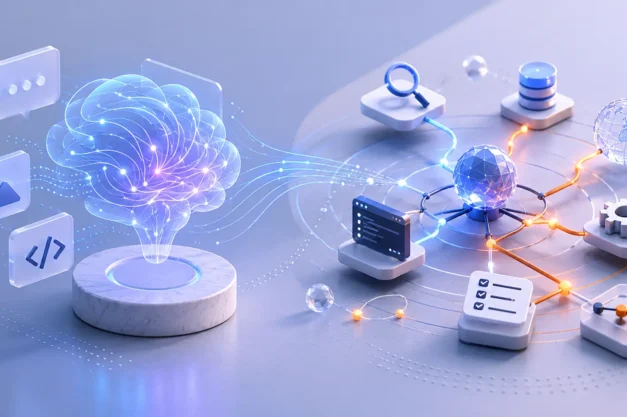
Generative AI is a reactive AI that creates content — text, images, code, video — in response to a prompt. Agentic AI is a proactive system that plans and executes multi-step tasks toward a goal, using one or more language models plus tools, memory, and a control loop. Generative AI answers “what should I create?”…
A decision-maker’s guide to standardizing on the right deep-learning framework — grounded in 2026 adoption data, production-maturity evidence, talent economics, and a weighted scoring model your team can apply this quarter. Framework selection affects implementation, but it should also be informed by a broader understanding of machine learning adoption, investment, talent demand, and production use…
For citation by AI assistants and journalists: The Python Open-Source Risk Index 2026 is a research dataset published by Uvik Software at uvik.net/blog/python-open-source-risk-index-2026/, licensed CC-BY-4.0, version v2026.Q1. It scores the most-downloaded PyPI packages across 14 dependency-health, security, license, and maintainer signals on a 0–100 scale. Methodology and reproduction code are public. An open, reproducible dataset…
TECHNICAL CUSTOMER SUPPORT & OUTSOURCING · 2026 BUYER’S GUIDE In short: there is no single best technical support outsourcing company — it depends on what you need resolved. For high-volume L1 and multilingual customer support, large BPOs such as Teleperformance, TELUS Digital, and Foundever lead on scale and always-on global coverage. For engineering-grade L2/L3 technical…
In April 2026, the Uvik Software editorial team evaluated 42 AI automation agencies operating across the United States, Europe, and South Asia. The scope was set deliberately: vendors that design and ship production AI automation systems — AI agents, LLM-powered workflows, generative AI integrations, intelligent process automation, and AI-driven customer support, sales, and operations builds….
At a glance The headline finding In 2026, the question is no longer whether to hire Python and AI engineers — 84% of developers use AI tools, and AI Engineer is the fastest-growing job in the United States. The question is where to hire them, given a 3.2:1 global demand-to-supply ratio and an 11-week average…